ISS & SS Memories

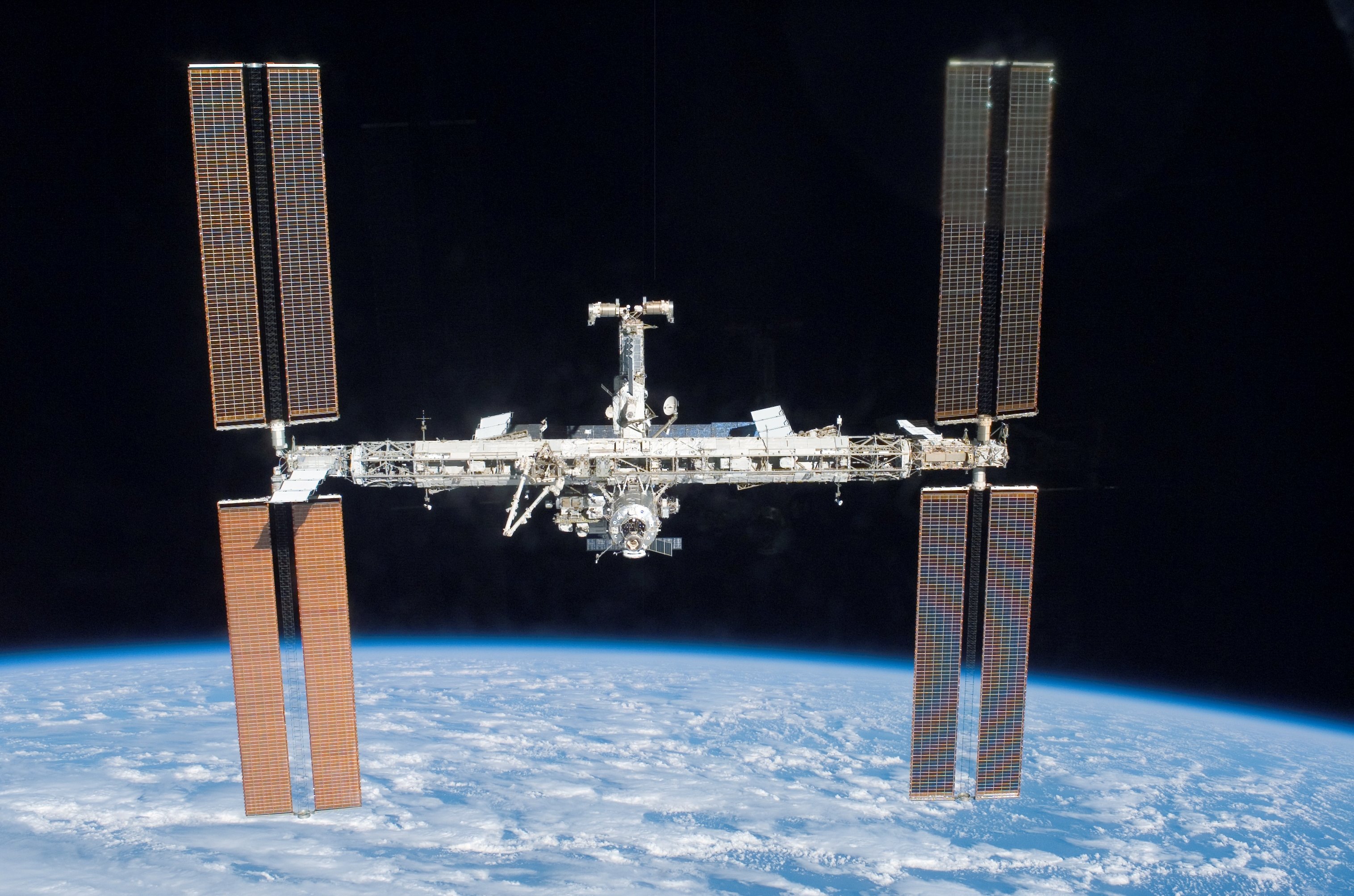
The last Space Shuttle flight took place in July 2011 (Atlantis, STS-135), and in going through the archives from ten years ago, I found this write-up about the International Space Station and the Space Shuttle seen together in the sky.

International Space Station & Space Shuttle – Docked

This past Sunday evening brought my family to Governor Dodge State Park north of Dodgeville for a stroll in the dark—and what we thought would be a “routine” flyover of the International Space Station.  Boy, were we surprised!  Even though conditions were quite hazy, the ISS made its appearance as predicted, but as it reached its culmination of 62° at 10:27 p.m. (6/17/07 CDT) we witnessed something none of us had ever seen before: a gradual brightening of the ISS to between -6 and -9 magnitude, followed by a gradual dimming back to the normal slightly negative magnitude of a favorable flyover.  We had observed a “sun glint” off of the large station’s many reflective surfaces.  What a treat!

Footnote #1: The ISS had a definite orangish tint to us, which may have been real in spite of the hazy conditions.

Footnote #2: No-line bifocals (progressive lenses) work well during the day, but try looking at a bright moving object at night (or stars in general) to see just how bad the optics are!  For night viewing, I recommend a pair of glasses (if you need them) for distance viewing only, with glass lenses (not plastic!) and 0.5 diopter greater correction than you normally use.  I have such a pair, but forgot to bring them with me that night.

International Space Station & Space Shuttle – Undocked

This past Tuesday, the Space Shuttle Atlantis (STS-117) undocked from the International Space Station, and, as luck would have it, there were two opportunities that evening to view the pair—separated by only 46 miles—cross the sky in a beautiful pas de deux.  The first and best event, which culminated at 9:33 p.m. (6/19/07 CDT), was still impressive in spite of bright twilight because the spacecraft were so bright.  The brighter and oranger ISS was leading Space Shuttle Atlantis by about 3° when first sighted low in the NW, which expanded to about 6° at culmination since both spacecraft were closer to Wisconsin and the axis between the two least foreshortened, shrinking again to 3° when both spacecraft disappeared into the shadow of the Earth low in the ESE.  The changing orientation of the axis connecting the two spacecraft as they crossed the sky was interesting to observe.

A curious phenomenon that my wife, daughter, and I all noticed was that the positions of the two spacecraft with respect to each other seemed to “wiggle” a bit at times as they crossed the sky.  What a strange optical illusion, because obviously both spacecraft were moving smoothly relative to Earth and relative to each other!

I also observed the second pass that evening, which reached a maximum altitude of only 14° in the WSW sky before the pair entered the shadow of the Earth at 11:07 p.m. CDT.  Both spacecraft were about two magnitudes fainter than before, and this time Atlantis seemed brighter and oranger than the ISS!

As any double star observer knows, though, the perceived color of an object is strongly dependent upon its brightness!

Polaris and the Diamond Ring

Many treasures await the binocular observer that are either not seen, or if seen not appreciated, telescopically, or with the naked eye.  One of these is the “diamond ring” asterism in Ursa Minor.  Point a pair of binoculars at Polaris any evening, and you’ll notice that Polaris is the “diamond” astride a ring-shaped circlet of stars.  Sweet!

The twelve stars that make up the diamond ring include one second magnitude star (Polaris 2.0), one sixth magnitude star (HR 286 6.5), four eighth magnitude stars (HD 8395 7.9; HD 14369 & HD 11696 8.1; HD 18365 8.5), and six ninth magnitude stars (HD 14718 8.6; HD 12364 & HD 17376 8.8; SAO 223 8.9; SAO 214 9.0, SAO 508 9.1)—perfect for binoculars!  Here are their distances, in light years.
Of course, there are uncertainties in each distance, so the actual distance to each star is probably within the range shown below.  You’ll notice that generally, the farther away a star is, the greater is the uncertainty in its distance.

Our best guess, then, for when the light we are receiving tonight left each star is shown below.

Due to uncertainty in each trigonometric parallax, more properly we should list a date range when the light left the photosphere of each star, shown below.

Science News

Some people are molded by their admirations, others by their hostilities. – Elizabeth Bowen (1899-1973)

I have many admirations, and one of them is for a bi-weekly magazine called Science News.  My first introduction to this amazing publication was in 1973, when a friend of my recently-divorced mother, Frank Gillotti, started giving me his copies after he was finished reading them.  I was a sophomore at Hoover High School in Des Moines then, and by my senior year I was a subscriber for life.

Science News has been around a long time.  It started way back in 1922 as Science News-Letter, and remained that until 1966, when it became Science News.  Today, Science News has an international circulation of about 94,000—alarmingly, down quite a bit (like most magazines) from its peak circulation of nearly 250,000 in the late 1980s.  Unlike most magazines these days, Science News is not saturated with advertising, but is instead chock-full of well-written, accurate, and timely news and feature articles about all areas of science, technology, and mathematics.  Yes, astronomy and space science are covered thoroughly!  And, with each bi-weekly1 issue numbering 32 pages (though, occasionally 40+), it is easy to find the time to read or at least skim it cover-to-cover every two weeks.
In my early years reading Science News, one writer I particularly admired was senior editor / physics editor Dietrick E. Thomsen, whom I was so fortunate to meet at the AAS Meeting in Ames, Iowa in June 1986.  Sadly, he passed away in 1988.  One thing I remember about him besides his always-excellent articles was his passion for passenger trains, and his growing distaste for air travel at the time (and it has only gotten worse).  At that time, I had never ridden on a passenger train, but nowadays I ride Amtrak regularly, and love it!

Another fantastic writer in those days at Science News was space science editor Jonathan Eberhart (1942-2003) whose brilliant and unconventional career was sidelined by multiple sclerosis by 1991.  The AAS Division for Planetary Sciences (DPS) has awarded the Jonathan Eberhart Planetary Sciences Journalism Award annually since 2009.  J. Kelly Beatty (Sky & Telescope) was the first recipient (in 2009), and Emily Lakdawalla (The Planetary Society) won the 2011 award.

Science News maintains an excellent web site.  One feature I really like is they provide a complete list of sources and references for their magazine articles.

And, Society for Science & the Public (SSP), the nonprofit corporation that produces Science News, also produces an excellent website and print magazine for readers ages 9-14, Science News Explores.

Check out these wonderful resources regularly, and while you’re at it, don’t forget to subscribe!

1Science News published weekly through April 12, 2008.  Science News began publishing bi-weekly on May 10, 2008, and then monthly in January 2025.

What Is and What Might Have Been

We continue our series of excerpts (and discussion) from the outstanding survey paper by George F. R. Ellis, Issues in the Philosophy of Cosmology.

Thesis E2: We cannot take the nature of the laws of physics for granted.
One cannot take the existence and nature of the laws of physics (and hence of chemistry) as unquestionable in cosmology—which seems to be the usual habit in biological discussions on the origin and evolution of life.  This is in stark contrast to the rest of science, where we are content to take the existence and nature of the laws describing the fundamental behaviour of matter as given and unchangeable.  Cosmological investigation is interested in the properties of hypothetical universes with different physical behaviour.  Consideration of ‘what might have been’ is a useful cosmological speculation that may help throw light on what actually is; this is a statement of the usefulness of ‘Gedanken experiments‘ in cosmology.

Practical science, engineering, and technology are prescriptive.  If we do a, we know from experience that b will occur.  Using the laws of physics, we can predict the location of the Moon as a function of time, put a spacecraft in orbit around Saturn, or build a light bulb that will illuminate.  Though we may be curious, we are not required to know why or how these laws exist—or how they might have been different—only that they do work, time and time again.

Cosmology, though firmly rooted in science, is different.  We are passive observers in a very large and very old universe, and there is no absolute guarantee that the laws of physics that work for us so well in the here and now apply to all places and at all times.  We must attempt to understand the laws of physics in a larger context that does involve some well-reasoned and reasonable speculation.

“Not only does God … play dice, but He sometimes confuses us by throwing them where they can’t be seen.” – Stephen Hawking

“Sometimes attaining the deepest familiarity with a question is our best substitute for actually having the answer.” – Brian Greene

In politics, governance, sociology, and philosophy, too, I would submit to you that consideration of “what might have been” is useful in helping us to understand what actually is.  Such reflection, en masse, might even lead to substantive change.

“Why is it that here in the United States we have such difficulty even imagining a different sort of society from the one whose dysfunctions and inequalities trouble us so?  We appear to have lost the capacity to question the present, much less offer alternatives to it.  Why is it so beyond us to conceive of a different set of arrangements to our common advantage?” – Tony Judt

Getting back to cosmology, however, for the moment…

Indeed if one wants to investigate issues such as why life exists in the universe, consideration of this larger framework—in essence, a hypothetical ensemble of universes with many varied properties—is essential (this is of course not the same as assuming an ensemble of such universes actually exists).  However, we need to be very cautious about using any claimed statistics of universes in such a hypothetical ensemble of all possible or all conceivable universes.  This is usually not well defined, and in any case is only relevant to physical processes if either the ensemble actually exists, rather than being a hypothetical one, or if it is the outcome of processes that produce well-defined probabilities—an untestable proposal.  We can learn from such considerations the nature of possible alternatives, but not necessarily the probability with which they might occur (if that concept has any real meaning).

It is easy to imagine a universe without life.  But we obviously do not live in such a universe.  There may be other universes devoid of life.

For the more thoughtful among us, it is easy to imagine a civilization without war, guns, violence, extrinsic suffering1 caused by others, or deprivation.  Obviously, we do not live in such a society.  But how can we say it is impossible, or even improbable?  It would be easy to find many millions of people in the world even today that would never fight in a war, would never own or use a gun, who would never resort to violence, who would never cause others to suffer, and who would make eliminating deprivation and poverty a top priority.  The question for the scientists is: what is wrong with the rest of us?

1Extrinsic suffering is suffering caused by others or circumstances completely outside of one’s control.  Intrinsic suffering, on the other hand, is self-inflicted—through our own failings, poor judgement, or mistakes that we make.

Growing Older

As we grow older,
That which is older grows upon us.
Time accelerates,
And the world seems a smaller place.

The years go by like months,
The months go by like weeks,
The weeks go by like days,
The days go by like hours,
And the hours go by like minutes.

And our world which in our youth was all that we knew
Slowly reveals itself to be a surprisingly alien place,
Full of centuries of hard work, unlikely events, and compromise:
The world could be a very different (and better) place,
Even within the confines of human nature.

Taken to its natural conclusion
Were we each to live for millennia, perhaps longer
We would find eternity in an instant
And infinity at the door.

David Oesper

References
Ellis, G. F. R. 2006, Issues in the Philosophy of Cosmology, Philosophy of Physics (Handbook of the Philosophy of Science), Ed. J. Butterfield and J. Earman (Elsevier, 2006), 1183-1285.
[http://arxiv.org/abs/astro-ph/0602280]

Einstein, Brahms, and Exoplanets

What do Albert Einstein, Johannes Brahms, and exoplanets have in common?  They are all great courses provided by The Great Courses.

Call me old fashioned, but I love a great lecture presented by an expert in the field.  What a wonderful way to get introduced to a new subject, or refamiliarize yourself with an old subject, or deepen your knowledge about a subject with which you are already familiar.

I recently finished watching the magnificent course “Albert Einstein: Physicist, Philosopher, Humanitarian” by Don Howard, Professor of Philosophy at the University of Notre Dame, former Director of Notre Dame’s Graduate Program in History and Philosophy of Science, and a Fellow of the University of Notre Dame’s Reilly Center for Science, Technology, and Values.

I have taken an interest in Einstein since I first encountered relativity in my early teens, and of course being a physics major in college I became much more familiar with Einstein’s remarkable scientific contributions.  But this course surprised and delighted me with many details about Einstein himself.  Howard obviously has a much deeper understanding of Einstein the person than most physicists do, and his enthusiasm for his subject comes through in every lecture.  I doubt you will find a more thorough treatment of Einstein anywhere short of reading a biography.  Recommended!

As luck would have it, while I was nearing the end of this course, Time came out with an updated reissue of its special edition, “Albert Einstein: The Enduring Legacy of a Modern Genius”.  Great photographs, great text.  Well worth every penny!


Robert Greenberg is music historian-in-residence with San Francisco Performances and has produced a lot of high-quality music courses for The Great Courses.  I am in the process of watching all of them (yes, really, they’re that good!).  Recently, I finished his course on Johannes Brahms, who is probably my all-time favorite composer.

The music of Brahms is well known by many, but how much do you know about Johannes Brahms the person, and the events of his life?  This course is the perfect introduction to those subjects, as well as his extraordinary compositions.

It is amazing to me that no one has yet made a feature-length film about the life of Johannes Brahms (1833-1897).  A historically accurate dramatic portrayal could easily become one of the most significant musical film biographies ever made.  Brahms was one of the greatest composers who ever lived, and he had an interesting life—there is much material to draw upon for the making of this movie.  Greenberg’s course is a great place to begin, and I would also recommend the definitive biography, “Brahms: His Life and Work” by Karl Geiringer.


You’ve just got to love The Great Courses.  This is what television could have been.  PBS is the only thing that even comes close.  I recently completed “The Search for Exoplanets: What Astronomers Know” presented by Joshua Winn, now Professor of Astrophysical Sciences at Princeton University.  Not since Carl Sagan or Neil deGrasse Tyson have I been this excited about an astronomy presenter.  Josh Winn presents his exoplanets course with enthusiasm, precision, and a delivery that really draws you in to the subject.  I hope we see much more of him in the future.

A Real Martian Anomaly

Who cares about the Face on Mars?  It was just an interesting trick of light and shadow—a pareidolia.  Now comes a bona fide Martian mystery: pit craters (also known as skylights).  Pit craters are thought to be collapse pits into subsurface void spaces.  Cave entrances, in other worlds. ;o)

Here are a few:

https://cosmicreflections.skythisweek.info/wp-content/uploads/2023/09/189803main_ody-cave2.jpg
(A) “Dena,” (B) “Chloe,” (C) “Wendy,” (D) “Annie,” (E) “Abby” (left) and “Nikki,” and (F) “Jeanne.” Arrows signify north and the direction of illumination.
Possible Skylight Near Elysium Region (141.317° E, 30.563° N)
Pit Crater near Elysium Mons (149.909° E, 23.210° N)
Very Large Pit Crater in Daedalia Planum (237.545° E, 19.474° S)
Possible Skylight Near Arsia Mons (237.837° E, 2.055° S)
Possible Cave on Arsia Mons (238.663° E, 6.355° S)
Pit Crater (239.549° E, 1.320° S)
Pit South of Arsia Mons (240.021° E, 13.851° S)
Incipient Pit Crater in the Arsia Chasmata (240.040° E, 6.518° S)
Pit Crater Chain South of Arsia Mons (240.051° E, 14.285° S)
Possible Skylight in Arsia Mons Region (240.326° E, 7.850° S)
A Pair of Small Pit Craters (240.907° E, 5.691° S)
Candidate Cavern Entrance Northeast of Arsia Mons (241.396° E, 5.532° S)
Possible Skylight on a Lava Tube Northeast of Arsia Mons (241.900° E, 2.272° S)
Dark Rimless Pits in Tharsis Region (247.549° E, 17.263° N)
A Giant Cave on a Giant Volcano (248.485° E, 3.735° N)
Pit on the Eastern Flank of Pavonis Mons (248.571° E, 0.457° S)
Pit or Cave in Tantalus Fossae (257.532° E, 35.030° N)
Collapse Pit in Tractus Fossae (259.359° E, 26.143° N)

Most of these features are of a volcanic, rather than impact, origin.  Both the Earth and the Moon have similar features, entrances to subsurface caverns and tunnels.  What wondrous discoveries await future explorers!

Saturn at Eastern Quadrature

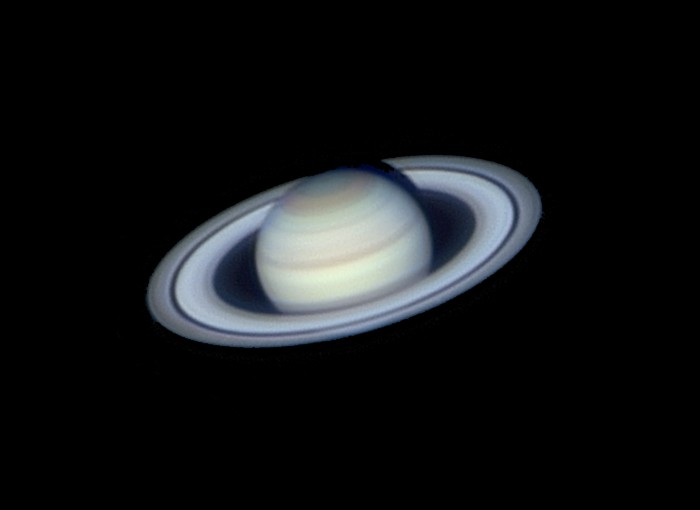
Wednesday evening, September 13, 2017, at 9:59 p.m. CDT, Saturn reaches eastern quadrature as Saturn, Earth, and Sun form a right triangle.  Eastern quadrature is so named as Saturn is 90° east of the Sun.  This is the time when Saturn presents to us its most gibbous phase.  Even so, Saturn will be 99.7% illuminated due to its great distance from us.

A more noticeable effect will be the shadow of Saturn on its rings, a phenomenon best seen at eastern or western quadrature.

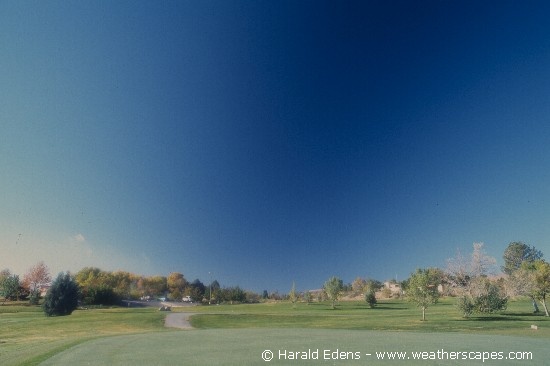
Saturn will only be 12° above our horizon in SW Wisconsin at the exact moment of eastern quadrature Wednesday evening.  Earlier that evening, Saturn crosses the celestial meridian at 6:51 p.m.—22 minutes before sunset.  If it weren’t for daylight, that would be the best time to observe Saturn: when it is highest in the sky and we are seeing it through the least amount of atmosphere.  If you have a telescope equipped with a polarizing filter, you can significantly darken the blue sky background around Saturn since the planet will be exactly 90° away from the Sun, where the scattered sunlight is most highly polarized.  Rotate the polarizer until the sky is darkest around Saturn.

Speaking of Saturn, the Cassini mission will come to a bittersweet end on Friday, September 15 around 5:31 a.m. CDT when the storied spacecraft, which has been orbiting Saturn since June 30, 2004, will have plunged deep enough into Saturn’s atmosphere that it is no longer able to point its high gain antenna towards Earth.  Soon after that, Cassini will burn up in Saturn’s massive atmosphere.  We on Earth will not receive Cassini’s last radio transmission until 1h23m later—at around 6:54 a.m. CDT.

Emily Lakdawalla, who is arguably the best planetary science journalist in the world these days, includes the visual timeline of Cassini’s demise shown below and in her recent blog entry, “What to expect during Cassini’s final hours”.

Also, on Wednesday evening, don’t miss NOVA: Death Dive to Saturn, which will air on Wisconsin Public Television’s flagship channel at 8:00 p.m.

It may be a while before we visit ringed Saturn and its retinue of moons again.  But further exploration of Titan and Enceladus is certain to feature prominently in humankind’s next mission to Saturn.  Hopefully, that will be soon.

Nearest Neutron Star

So far as we know, RX J1856.5-3754 is the neutron star closest to our solar system.  This radio-quiet isolated neutron star can be found between 352 and 437 ly from our solar system, with its most likely distance being 401 ly.  Directionally, it is located within the constellation Corona Australis, near the topside of the CrA circlet, just below the constellation Sagittarius.  Its coordinates are:

α2000 = 18h 56m 35.11s, δ2000 = -37° 54′ 30.5″.

RX J1856.5-3754 was formed in a supernova explosion about 420,000 years ago.  Today, this tiny 1.5 M☉ star about 15 miles across has a surface temperature of 1.6 million K and shines in visible light very feebly with an apparent visual magnitude of only 25.5.  Its surface is so hot that its thermal emission is brightest in the soft X-ray part of the electromagnetic spectrum; this is how it was discovered in 1992.

Like all neutron stars, RX J1856.5-3754 has a very intense surface magnetic field (B ≈ 1013 G) which causes the electromagnetic radiation leaving it to exhibit a strong linear polarization.  In the presence of such a strong magnetic field, the “empty” space through which the light travels behaves like a prism, linearly polarizing the outgoing light through a process known as vacuum birefringence.

An active area of neutron star research currently is a precise determination of their diameters.  We do not yet know whether the extremely dense central regions of these stars contain neutrons, or an exotic form of matter such as a quark soup, hyperons, a Bose-Einstein condensate, or something else.  Knowing the exact size and mass of a neutron star will allow us to infer what type of matter must exist in its interior.  The majority of neutron stars are pulsars with active magnetospheres that make it difficult for us to see down to the surface.  More “quiet” neutron stars such as RX J1856.5-3754 are the best candidates for precise size measurements of the neutron star itself.  An accuracy of at least ± 1 mile is needed to begin to distinguish between the various models.

References
Mignani, R.P., Testa V., González Caniulef, D., et al. 2017, MNRAS 465, 1, 1
Özel, F., Sky & Telescope, July 2017, pp. 16-21
Yoneyama, T., Hayashida, K., Nakajima, H., Inoue, S., Tsunemi, H. 2017
[https://arxiv.org/abs/1703.05995]

Dark Sky Community Prospectus

  1. Rationale
    1. A small community (hereafter referred to as a dark sky community) can thrive without the need for streetlights or any other dusk-to-dawn lighting
    2. A dark sky community would appeal to people who value the night sky and a natural nighttime environment
    3. It will probably be many years before the majority of people will accept life without dusk-to-dawn outdoor lighting
    4. A dark sky community must be located far enough away from neighboring communities and other significant light sources that the night sky and nighttime environment will not be adversely affected, either now or in the foreseeable future
    5. It is better to live in community than in isolation
  2. Community Attributes
    1. A dark sky community should be multi-generational, but since rural employment options are limited, moving to a dark sky community may be easier for retired or semi-retired folks
    2. A dark sky community should be affordable, with a variety of housing options (units that can be rented, for example)
    3. An observatory commons area should be developed for observing and include more than one observatory for use by members of the community
    4. The dark sky community should engage in an ambitious educational outreach program, including the operation of an astronomy resort and astro-tourism business
    5. The business end of the community should be a nonprofit corporation or cooperative that operates the astronomy resort and rental properties
    6. The community should share resources as much as possible, freeing residents from the financial burden of having to individually own everything they need or use
    7. The dark sky community should engage in an ambitious program of collaborative astronomical research and data collection, working collaboratively within the community and with amateur and professional astronomers outside the community
  3. Community Location
    1. The most affordable option would be to “convert” an existing rural subdivision or small town into a dark sky community, current residents willing, of course!
    2. The best location for a dark sky community would be within, or adjacent to, a protected natural area such as a state or national park
    3. Recognizing that there would be distinct advantages in siting a dark sky community reasonably close to a town or city with medical facilities, it would be best (for astronomical reasons) for the dark sky community to be located southeast or southwest of the larger community
  4. Philosophy
    1. In an age of technological wonders such as digital imaging, computer-controlled telescopes, remote observing, and space astronomy, we recognize that there is still value in the experience of “firsthand astronomy” both for ourselves and our guests

For greater detail, see my astronomy village proposal for Mirador Astronomy Village.  I welcome your comments and ideas here.

Identifying Distant Light Pollution Sources

Ten years ago, I lived within easy walking distance of the south edge of Dodgeville, and on one starry evening, I walked to a favorite hilltop with a good view of the sky just south of town.  To my surprise and displeasure, I noticed a bright light dome in the southeast I had never noticed before.  Where was that light coming from?

Fortuitously, the bright star Antares was at that moment very close to the horizon, and right above the offending light dome!  I noted the time: 10:25 p.m. CDT on 15 May 2007.  And the observing location: 42° 57′ 06.4″ N, 90° 08′ 16.9″ W.

After getting home, I started up the Voyager planetarium software on my Macintosh, set the date and time to the observation time, and the observing location listed above.  I found that at that moment, Antares was at an azimuth of 134.2°.

Now, grabbing a protractor and a Wisconsin state map, I quickly determined that the most likely city along the 134.2° azimuth line from Dodgeville was Monroe, Wisconsin.  Though quite some distance away, could this have been the source of the light dome I saw?

Using a great circle calculation program on the internet and the known geographic coordinates (latitude, longitude) for the two locations using Wikipedia, I determined that Monroe is at bearing (azimuth) 133.5 from my observing location near Dodgeville at a distance of 35 miles.  This matched my star-determined azimuth quite well.

Was there an outdoor athletic event going on in Monroe at that time to cause so much light pollution?

Could the light dome possibly have been coming from Rockford, Illinois?  Even though Rockford’s bearing of 131.1° makes it a suspect, its line-of-sight distance of 71 miles makes this extremely unlikely.